GSA SER Contextual Backlinks
페이지 정보

본문
GSA SER Contextual Backlinks
Understanding Contextual Backlinks in GSA SER
GSA Search Engine Ranker (SER) is an automated link building tool capable of creating backlinks across a vast range of platforms. Among the most sought-after link types in modern SEO are contextual backlinks—links placed within the body of existing or newly created content, surrounded by relevant text. When configured correctly, GSA SER can generate these contextual placements at scale, embedding your links in articles, blog posts, and web 2.0 properties.
What Are GSA SER Contextual Backlinks?
A contextual backlink is a hyperlink that appears naturally inside a piece of written content, rather than in a sidebar, footer, or comment section. In the context of GSA SER, this means the software uses its engine to find target sites, GSA SER verified lists register accounts, and publish articles that contain your anchor text and URL directly inside paragraphs. The result mimics an organic editorial citation.
How GSA SER Builds Contextual Links
The software relies on several built-in engines and custom scripts to post content:
- Article submission engines: Targets article directories that allow body text with HTML links.
- Web 2.0 and blog platforms: Creates posts on sites like WordPress.com, Blogger, or self-hosted blogs using automated registration.
- Social network engines: Publishes posts with embedded links on platforms that support rich text.
- Guestbook and comment engines: While often lower quality, some comments appear inline and can be contextual if the platform wraps them inside the content flow.
To generate the surrounding text, GSA SER uses spun content, imported article databases, or AI-generated paragraphs. The keyword placement, anchor text variation, and link insertion are controlled through the project settings.
Setting Up a Contextual Backlink Campaign
A successful contextual link building campaign hinges on careful configuration. Below is a practical step-by-step approach.
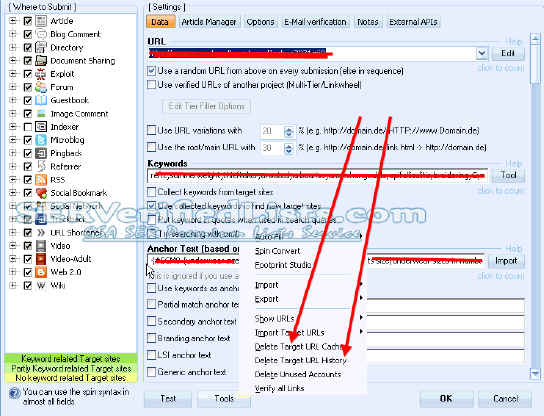
1. Preparing High-Quality Content
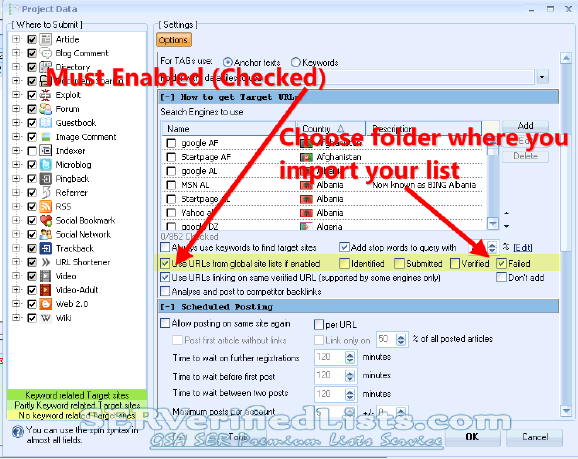
Generic spun content leads to low indexing rates and poor link juice. Instead:
- Use tier-1 ready articles written by a human or a reliable AI tool.
- Insert spintax for sentence-level or paragraph-level variation to avoid duplicate content.
- Embed anchors naturally: place 1-2 contextual links per article within the body text.
2. Configuring the Article Manager
Within GSA SER verified lists SER’s "Article Manager" tab, you can upload multiple articles and assign tags, categories, and anchor text rules. Set the software to pull content from here for platforms that require a full post body.
3. Selecting the Right Engines and Platforms
Filter your engine selection to prioritize platforms that support HTML in the post body. In the engine list, sort by category and select:
- Web 2.0 Blogs (e.g., Blogspot, Jigsy, Yola)
- Article Directories (only those still active and indexable)
- Social Networks that allow long-form posts with hyperlinks
- Custom engines imported from third-party lists that focus on contextual placement
4. Anchor Text and Link Placement
Under "Project Options," define anchor text variations. For contextual relevancy, use partial match, branded, and generic anchors evenly. Enable the option "Insert link in the middle of the article" and set the preferred link count to 1 or 2 per post. You can also use macros like browse around this web-site) and GSA SER proxy email captcha setup inside your article spintax for automatic insertion.
5. Proxy and Submission Settings
Contextual link building often targets stricter platforms that may flag aggressive automation. Use dedicated or semi-dedicated proxies, set decent human-emulation delays, and rotate user agents. Enable captcha solving services to handle registration and posting challenges.
Advantages of Contextual GSA SER Backlinks
- Improved relevance signals: Links inside thematic content are valued higher by search engines.
- Better indexing rates: Pages with real article content get crawled more often than empty profiles or forum signatures.
- Tiered link building power: Contextual backlinks make excellent tier-1 properties that can pass authority to your money site.
- Scalability: Once configured, the tool can generate hundreds of unique-looking contextual links per day.
Risks and Common Pitfalls
Not all contextual links are equal. Misconfiguration can lead to footprints, spam signals, or manual penalties. Be mindful of:
- Over-optimized anchor text: Too many exact-match anchors across low-quality sites look unnatural.
- Thin or duplicate content: Context requires substance. Short spun articles with identical structure hurt outreach.
- Low-tier platforms: Many freely available GSA SER target lists include sites with zero editorial standards. Focus on platforms that survive manual review.
- Lack of indexing: Contextual links on orphaned or penalized domains may never pass value. Use indexing services or internal tiered linking to force crawling.
Best Practices for Long-Term Results
- Use GSA SER Contextual Links as Tier 2 or Tier 3: The safest approach is to point automated contextual links to buffer properties like Web 2.0s, which then link to your money site. This insulates your primary domain from direct spam risks.
- Invest in premium content sources: Feed the tool with article sets that have real semantic depth. Even basic AI-generated 300-500 word posts outperform classic multi-spun gibberish.
- Regularly clean your verified links list: Export verified URLs and run them through a batch index checker or link analyzer. Remove domains with low metrics or high OBL (outbound link) counts.
- Diversify anchor text and link placement syntax: Vary between "according to [source]", "read more at", and natural inline citations. Use image alt attributes and even occasional plain URLs to reduce patterns.
- Combine with other tools: Use bulk article generation platforms and integrate them with GSA SER’s "Scheduler" for continuous drip-feeding rather than blasting all links at once.
FAQs About GSA SER Contextual Backlinks
Can GSA SER create contextual backlinks directly to my money site?
Technically yes, but it is strongly recommended to use them as a secondary or tertiary layer. Direct contextual links from low-quality automated platforms can trigger algorithmic filters. Buffer them through higher-quality tier 1 assets for safety.
How do I ensure my contextual links get indexed?
Indexing depends on the strength of the domain where the post is published. Boost indexing by:
- Posting links to the created pages from other indexed properties.
- Using ping services and RSS feeds integrated in GSA SER.
- Adding the URLs to an indexer tool or a dedicated tier-2 GSA campaign.
What content length is ideal for these contextual posts?
At least 150 words of readable text surrounding the link. For better performance, aim for 250-500 words. The algorithmically perceived "context" strengthens when the link is surrounded by topically coherent sentences rather than random keyword stuffing.
Do I need a custom engine for contextual backlinks?
While GSA SER has many built-in engines that support HTML posts, advanced users often import custom engines tailored for specific CMS footprints (e.g., Drupal blogs, certain forum blogs). Public forums and SEO groups frequently share these specialized engines.
How can I spot true contextual links vs. profile/auth links?
A true contextual link resides inside the main content area. In GSA SER, stick to platforms categorized under "Article," "Blog Comment" (if the comment appears within the article flow), and "Web 2.0." Avoid engines whose primary placement is in a sidebar, author bio box, or footer unless you intentionally want those types.
Is spun content still acceptable for contextual backlinks?
Heavy paragraph-level or word-level spinning is detectable and often leads to low-quality pages. Instead, use whole-sentence or paragraph spintax with a large pool of unique blocks. The goal is to present a page that, at a glance, reads naturally and provides topical context—not to trick advanced NLP algorithms.
Final Notes on Automation and Relevance
GSA SER contextual backlinks can be a powerful addition to a diversified link building strategy when treated as a scalable support layer. The key is to manage quality at the content level and placement criteria rather than solely maximizing volume. By controlling spinning depth, selecting clean platforms, and integrating them into a tiered architecture, you can generate contextual signals that complement your main off-page SEO efforts without inviting unnecessary risk.
- 이전글구글찌라시 [ adbada.com ]는 새로운 트렌드를 놓치지 않는 최고의 정보원입니다. <a href="https://adbada.com" target="_blank">애드바다</a> 26.06.12
- 다음글정발산 라운지바청소 | 영업전청소 ◇ 카카오ID : ahsld24 26.06.12
댓글목록
등록된 댓글이 없습니다.
